
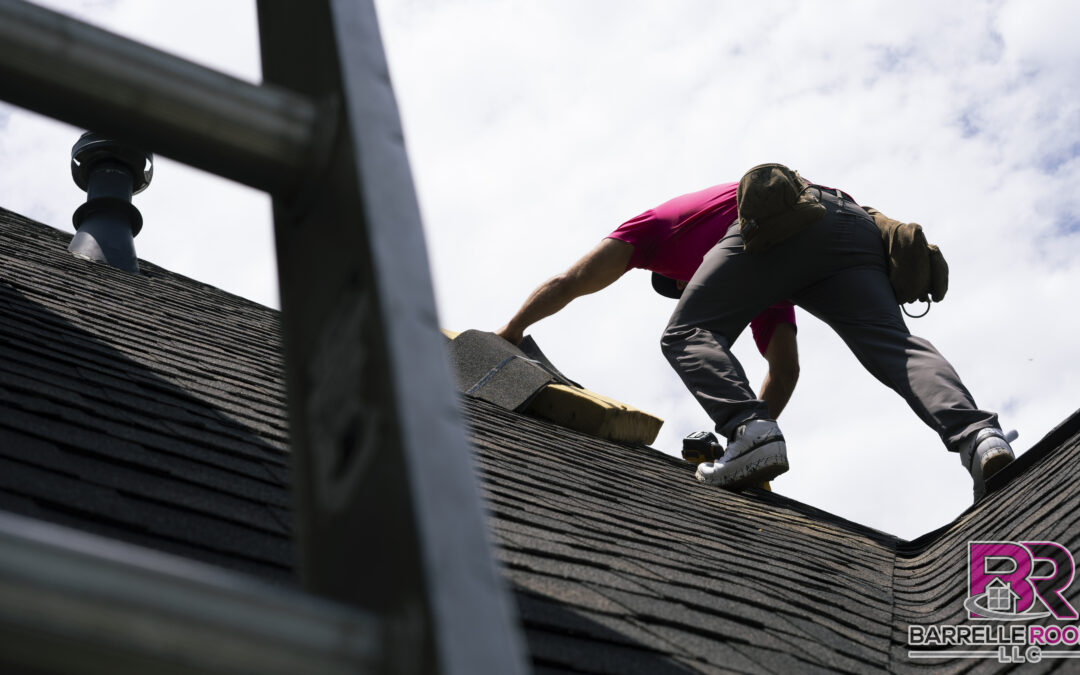
When temperatures drop to freezing, a multitude of roofing problems can occur. So how cold is too cold, and what can (and can’t) we do to help?
When Roofing is Too Cold (and Why)
While there are no set “rules” for roofing, this is what homeowners can expect:
- When the surface has frost, ice, or snow. Even if a thermometer reads a warmer temperature, shaded roof planes and other circumstances can cause rooftops to develop invisible frost, thin ice, and slick granules. Even a simple repair becomes a fall hazard under these conditions, making the roof unsafe for work.
- When the temperature is below ~40°F. This is the most common manufacturer threshold, because materials begin to behave differently in colder weather. Asphalt shingles become less pliable and can be more prone to cracking if not handled properly. Sealants and adhesives often require specific temperature ranges and a dry substrate to bond and cure correctly. When you combine cold with wind, anything not properly secured is more likely to lift.
- When it is deeply cold (commonly below ~20–25°F). At this range, the probability of material handling damage and poor adhesive performance climbs even higher. Many contractors limit work to temporary work only, then return for permanent installation when conditions improve.
What a Roofing Crew Can Do in Freezing Weather
Even in poor conditions, there are practical steps we can take to prevent your situation from escalating.
A professional crew can perform a leak assessment despite the cold weather. They will inspect common points of entry (chimneys, skylights, etc.) to determine the path of moisture and narrow down the likely source. From there, they can also determine what can safely be addressed during the period of cold weather.
If the roof is safe to access and the leak area can be isolated, temporary coverings and tarping are one of the most effective emergency measures. A well-installed temporary cover can buy time and protect the interior until a permanent repair window opens:
- Place above suspected entry point
- Secure attachment designed to withstand wind uplift
- Water-shedding layout that prevents runoff from routing under the tarp
Winter storms often create secondary damage to an already existing leak, such as lifted shingles, loose ridge caps, and unsecured edging. If conditions allow, a crew can secure those loose items to prevent blow-off. This can ensure that small damage doesn’t grow into a missing roof section.
What a Roofing Crew Can’t Do in Freezing Weather
To be candid, sometimes the best call is to stabilize the situation and schedule permanent work at a later, warmer date.
Full repairs on ice, frost, and wet decking cannot typically be done in cold conditions. It is very likely that the crew cannot safely access the roof, and even in the event that access is possible, installing onto a wet/icy substrate can lead to a failed repair and repeat leaks. It is only more beneficial for you and your roof to wait for better weather before committing to full repairs.
Repairs that rely on proper sealing can also not be done. Many repair methods rely on sealants, adhesives, or self-sealing shingle strips that perform best within recommended temperature ranges and on dry surfaces. In cold conditions, there is a risk that the repair looks complete but never truly bonds, leaving the roof vulnerable to wind lift and water intrusion.
What You Can Do While You Wait for Repairs
You can easily reduce both damage and cost before the cold leaves and the crew arrives:
- Contain water. Use buckets, towels, and plastic sheeting to contain any leakage. Move valuables away from the affected area.
- Watch electrical hazards. If water is near lights, outlets, etc., shut off power to the affected circuit and have the area properly assessed.
- Document. Take photos and videos of leaks, stains, and any visible exterior damage. This will help with repair planning and potential insurance discussions.
“Too Cold” Is About Safety and Standards
Here at Barrelle Roofing, we will not “push through” conditions that compromise safety or long-term performance. In cold weather, the best approach is often stabilize now and finish permanently when conditions support a clean, properly sealed installation. That strategy protects your home today without trading short-term speed for long-term problems.