
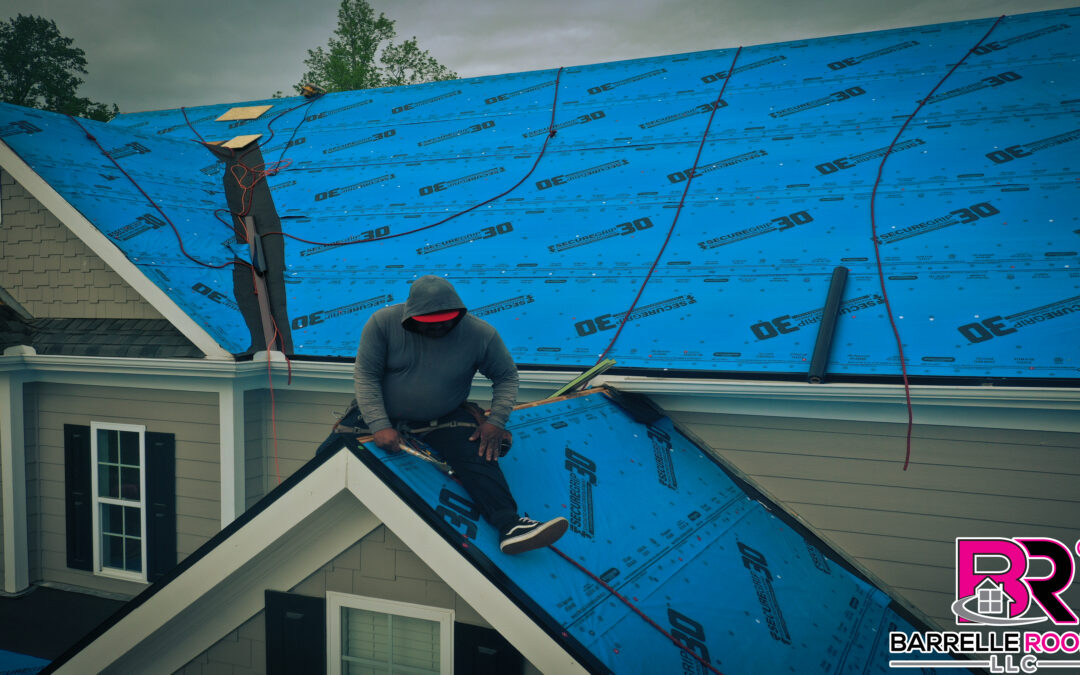
Roof flashing may not be the most glamorous part of the roof, but it is one of the most important. In fact, most leaks don’t start from shingles “wearing out”— they start at the transitions: where the roof meets a wall, where a chimney comes through, or where a skylight interrupts the shingle pattern. Anywhere where water is forced to change direction is exactly what flashing is designed to handle.
If you suspect flashing issues with your roof, call now: 770-658-0342
So, What is Flashing?
Roof flashing is a thin material (most commonly metal) that is shaped and installed to keep water from penetrating the roof system at joints and intersections. Flashing acts as both a bridge and a gutter at the same time; it covers seams and directs water back onto the roof surface so gravity can do its job.
Why Flashing Matters
Shingles are a water-shedding layer, but that doesn’t mean they’re a waterproof bathtub. When light rain hits your roof, most of the water runs down the surface and off the edge. However, in real storms— wind-driven rain, heavy downpours, debris buildup— water can get pushed sideways, upward, or back behind materials.
Flashing is the system that handles those more intense conditions. It’s also why two roofs that look identical from the street can perform completely differently; flashing is craftsmanship-heavy, and it requires correct layering, correct fastening, correct sealing, and correct integration. Poorly installed flashing can lead to a lot of structural damage and issues.
Where Flashing is Typically Installed
You can find flashing anywhere a roof has a change in plane, a penetration, or a termination:
- Roof-to-wall intersections
- Chimneys
- Valleys
- Skylights
- Vent pipes and roof penetrations
- Eaves and rakes
- Dormers and bump-outs
If you’re trying to locate a leak, these are the first places a good roofer checks!
Most Common Types of Flashing (and What Each One Does)
- Step flashing
- Step flashing is where a roof plane meets a vertical wall (like the side of a dormer). It’s installed in “steps”— one piece per shingle course— so water always lands on top of the next piece and continues flowing down and out. If step flashing is missing, installed as one long piece, or improperly overlapped, water can get behind the wall covering and rot the sheathing.
- Counterflashing
- Counterflashing is often found at chimneys. Itcovers the top edge of base flashing and is typically embedded into masonry (or integrated into siding/wall systems) to prevent water from getting behind the flashing assembly.
- Kickout flashing’
- Kickout flashing is a small but critical piece installed where a roof edge meets a wall near a gutter line. Its entire job is to kick water away from the wall and into the gutter instead of letting it run down the siding. As InterNACHI notes in their kickout flashing guide, step flashing and kickout flashing work together at roof-wall intersections.
- Valley flashing
- Valleys carry a lot of water. Some roofs use a woven or closed-out shingle valley, and others use a metal flashing valley (often an “open valley”), which can improve water channeling and durability when correctly installed. Valley problems usually show up as recurring leaks during heavy rain, especially if debris collects, nails are exposed, or the valley line wasn’t built to shed water cleanly.
- Drip edge
- Drip edge is installed at roof edges to help water drop cleanly into gutters and protect the roof deck edge from wicking moisture. It also helps prevent shingles from curling at the edge over time.
What Flashing Is Made Of
Most residential flashing is made from aluminum, galvanized steel, or copper. The material choice matters because flashing is constantly exposed to water and humidity, heat cycling, fasteners and sealants, and chemical reactions between dissimilar metals. A good installation will match the flashing material and fasteners appropriately and avoid mixing metals in ways that accelerate corrosion.
Signs Your Flashing May Be Failing
Some flashing failures are obvious, but many are subtle. Watch out for:
- Leaks that show up only during wind-driven rain
- Water stains near chimneys, skylights, or exterior walls that meet the roof
- Rusted, bent, or lifted metals at edges or around penetrations
- cracked/missing sealant at chimney counterflashing
- Siding rot or bubbling paint near roof-wall intersections (often a kickout issue)
- Granules and debris packed in valleys
If you see repeated “mystery leaks”, it’s probably not as much of a mystery as you think— it’s very likely a flashing problem.
Repair vs. Replace
A solid roofer will carefully evaluate the flashing instead of defaulting to replacing everything. The right answer depends on scope and system compatibility:
- Spot repair makes sense when the roof is otherwise healthy and the issue is isolated (e.g., one failed pipe boot or one damaged flashing section).
- Reflashing during replacement is best when you’re already replacing shingles because access is open and you can rebuild the flashing/underlayment layers correctly.
- Chimney flashing rebuild is common when counterflashing is failing os masonry joints have deteriorated.
One key principle: if you’re installing a new roof intended to last decades, it’s risky to rely on old flashing that may not have the same remaining life.
What to Expect from a Flashing-Focused Inspection
When Barrelle Roofing inspects flashing, we have a lot more goals than just to see if metal is present. We also look for:
- Are the pieces layered correctly?
- Are the fasteners placed where they won’t become leak points?
- Are transitions integrated with the underlayment appropriately?
- Are the right flashing used in the right locations?
- Are there signs of past repair masking a bigger issue?
Flashing Is Where Leaks Start— and Stop
Roof flashing is the quiet hero of a roof system. It handles the tricky intersections where water loves to sneak in. If you’re tracking a leak, comparing estimates, or just trying to protect your home long-term, understanding flashing will help you ask better questions and spot the difference between a quick patch and a true fix.
If you want an expert set of eyes on your roof’s transition, contact Barrelle Roofing and schedule an inspection today!