
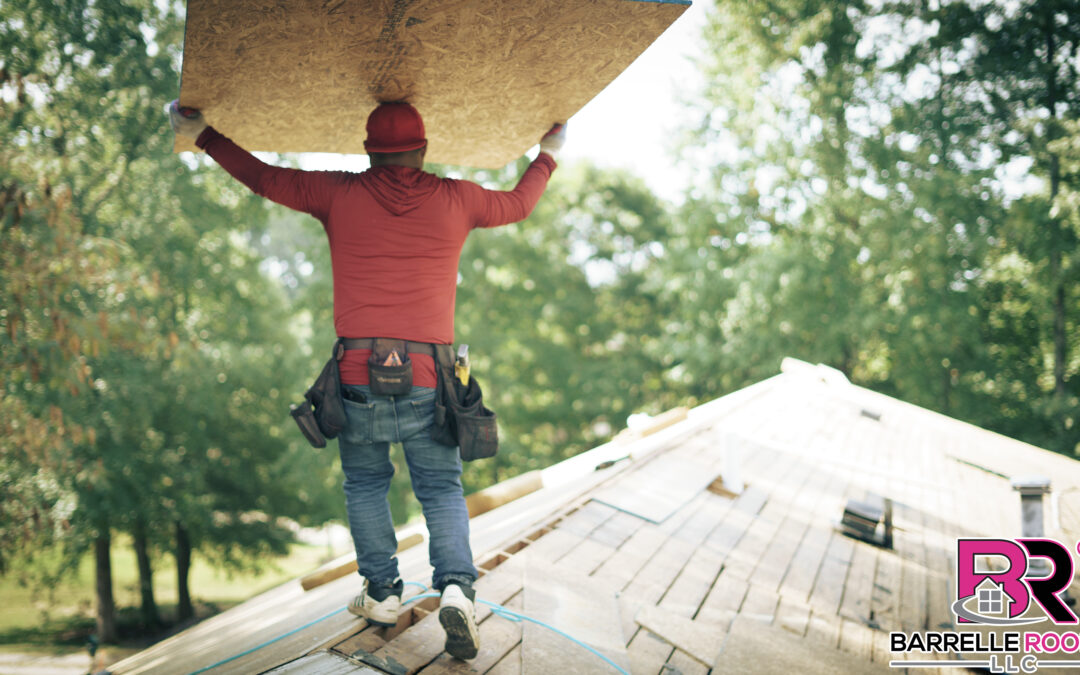
Walking on a roof may look simple— until you’re actually up there, on a sloped surface with loose granules under your feet, winds tugging at your balance, and a 15-25 foot drop waiting for a single misstep. Whether your checking for a leak, taking a quick look after a storm, or trying to clear some debris, roof access is one of the most common ways homeowners get seriously hurt.
Here at Barrelle Roofing, our crew is trained on roof access and fall protection. This guide gives you practical safety tips you can count on to help you make smart decisions— and, in many situations, decide that it’s safer to call a professional instead.
If that’s the case, call now: 770-658-0342
First: “Do I Really Need to Be Up There?”
Before you touch a ladder, your first step is to assess whether getting on the roof is truly necessary. Sometimes, you can get all the information you need just from the ground:
- Use binoculars to check for missing shingles, lifted tabs, displaced flashing, or debris piles.
- Look for interior signs (water stains, musty odors, etc.).
- Check gutters and downspouts for heavy shingle granules or shingle fragments.
If you don’t have to climb it, then the safest tip is simple: don’t climb it! Call a pro instead.
Weather is the Biggest Hazard
Roofs become dangerously slick way faster than most people could expect. Avoid roof access if there is:
- Rain (even slight drizzle!)
- Frost, ice, or snow
- Heavy dew
- Wind gusts
- Extreme heat
Even professional crews have to plan around weather conditions. No matter how careful you are, friction on a sloped surface is extremely dangerous.
Use the Right Footwear (Nothing Else Matters if You Don’t!)
Do not step onto a roof with smooth-soled shoes, boots with worn tread, or anything damp. Instead:
- Wear clean, rubber-soled shoes or boots with strong tread.
- Keep soles free of mud, sawdust, or gravel.
- Avoid stepping on loose granules, algae streaks, wet valleys, or metal flashing.
Ladder Setup
The ladder is the most common failure point, and many accidents happen before homeowners even reach the roof surface. Here are some ladder safety essentials:
- Place the ladder on firm, level ground. Never place it on loose mulch, wet grass, or unstable pavers.
- Use the 4:1 angle rule: about 1 foot out for every 4 feet up.
- Extend the ladder at least ~3 feet above the roof edge so you have handholds when transitioning.
- Secure the ladder at the top if possible and use a stabilizer standoff to reduce sideways movement.
- Keep 3 points of contact (two hands/one feet, or one hand/two feet) at all times.
For further professional guidance on preventing falls from ladders and roofs, see the CDC/NIOSH contruction fall prevention resources.
Plan for Fall Protection
Professionals don’t just go up on a roof and walk; they plan fall protection and safe access. If you’re not trained and equipped to handle fall protection correctly, the safest decision is to not go up entirely. OSHA’s fall protection overview is a solid high-level reference on what “real” fall protection involves (guardrails, safety nets, etc.).
However, if you have a harness, also make sure you also have:
- Properly rated anchor point
- Corret tie-off method
- Corret lanyard/lifeline
- Understanding of swing-fall hazards
- Rescue plan (yes, rescue plan)
How to Move on the Roof
If conditions are dry and you’re on a low-to-moderate slope, these movement tips reduce risk:
- Stay low: keep your center of gravity down; don’t stand tall on a steep slope.
- Move slowly: deliberate steps; no rushing.
- Avoid edges: stay well back from rakes/eaves and gable ends.
- Use the “triangle” stance: feet shoulder-width apart, one slightly downhill for stability.
- Step on structural support: generally over rafters/trusses, not weak decking zones.
- Don’t carry loose items in your hands: use a tool belt or hoist line so you can keep balance and handholds.
If you feel your confidence drop— even slightly— stop and get off the roof. “One more minute” is the cause of a lot of accidents.
What Materials Can Fail under You
No matter the steps you take, some roofs are simply not safe to walk without special methods:
- Old/brittle asphalt shingles
- Tile/slate
- Skylights
- Rotten decking
Skylights and roof openings deserve extra caution. Treat them like holes in the roof.
Watch for Power Lines
Ladders and long tools near overhead lines are a serious hazard. Maintain generous distance from any electrical lines, and don’t assume service drops are insulated or safe. If your access route goes near power lines, that’s another strong reason to call a professional.
Don’t Work Alone
If you go up, have someone present who can:
- Satbilize the ladder
- Hand you any tools
- Call for help if you fall or get stuck
Falls can harm you immensely and immediately. A phone in your pocket is not the same thing as someone watching.
When to Call a Professional
Contact a roofing company if any of these apply:
- Roof slopes feel too steep
- Roof is icy, slick, or covered by debris
- You see damaged, curled, or missing shingles
- You suspect soft spots or rot
- The inspection area is near an edge, skylight, or high drop
- You’d have to step on tile, slate, or metal
- You don’t have the right footwear or equipment
Safety First, Every Time
A roof inspection can feel like a quick task at first-glance, but the consequences of one slip are often severe. If you decide to go up, do it in only dry, calm conditions with the right footwear, a properly set up ladder, and a clear plan to avoid weak spots. If you have any doubt or unease whatsoever, the safest move you can make is to stay on the ground and call a professional. Barrelle Roofing is here to help give you answers, but first and foremost, our priority is to keep you (and your roof) safe.